


Elias wasn’t born in Indiana, but he’s called the Hoosier State home for most of his life. He and his wife Abbi moved to Broad Ripple after graduating from Taylor University in 2024. Now, Elias is the Manager of Strategic Initiatives for the Indy Chamber, where he supports special projects and strategic partnerships. He is also an active volunteer with his church and The PourHouse, a local non-profit that assists individuals experiencing homelessness.
Your Vote, Your Voice: 2026 Indiana Voter’s Guide
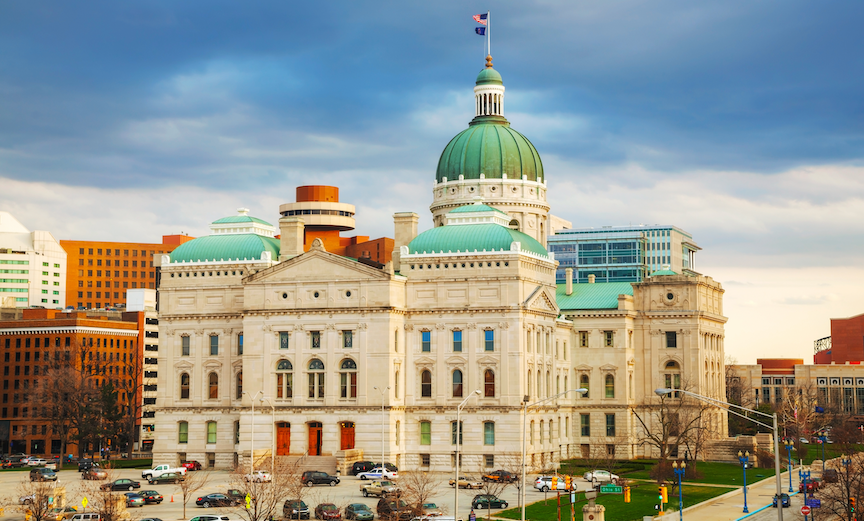
Photo courtesy of Getty Images
Let’s face it, the discourse around politics today is discouraging. Bad news makes news, and somehow inflammatory statements and personal attacks have become commonplace on the national stage. Those realities have often made me want to disengage. To bury my head in the sand, because what on earth can I do to change things?
There’s a pretty simple answer: Vote.
Elections are the foundation of a flourishing democracy. They are one of the clearest ways we the people make our voices heard. Our votes indicate to those in power what we care about and where their time and attention should be focused.
Every election is important, but there’s a lot on the 2026 Midterm ballot.
With four candidates for Indiana Secretary of State, over 100 seats up for election in the Indiana General Assembly, and important referendums on our public schools, the decisions voters make this year will profoundly shape Indiana’s future.
That matters. Your vote matters—and being informed matters, too. As you sit down and do your research ahead of this year’s election, I recommend starting right here with our resource guide to the 2026 Indiana Election.
Helpful Resources for Indiana Voters
With so many important decisions to consider, it is important to know where you can find the information you need. Thankfully, there are a number of really good resources out there.
- The Indiana Capital Chronicle puts together a helpful overview ahead of November 3rd and also issues a daily newsletter on all things Indiana politics.
- Mirror Indy has a similar guide and a number of resources related to voter education, how to register, and where to vote.
- Local news outlets often publish voter guides that include information about candidates and their perspective on key issues.
If your local outlet doesn’t do this, no worries! The Indiana Voter Portal allows you to look up what’s on your ballot based on where you live. From there, it’s easy to research candidates and other topics you want to learn more about.
The Indiana Voter Portal also has a lot of other essential information, including a way to check your voter registration. All you need to do is click “Check Your Registration Record,” enter your information, and it’ll tell you if you’re registered to vote. The Indiana Voter Portal even has a tremendous “Voting Location” resource to find your nearest polling centers and the hours they’re open.
Don’t Forget: The deadline to register for the 2026 General Election is October 5, and you must be registered in order to vote. You can begin your registration application online.
Know Your Ballot Before You Go
As someone who works adjacent to politics, you’d think I’d automatically feel informed. But I still had a lot of research to do before I voted in the primaries last May.
The need for informed opinions is especially important given the wide range of people, positions, and policies on this year’s ballot. As I mentioned, you can use the Indiana Voter Portal to look up everything that will be on your ballot based on your local precinct.
But to give you a quick preview, here are some of the items on the ballot this year:
- The Indiana Secretary of State, who oversees state election administration
- All 9 Indiana Seats in the U.S. House of Representatives
- All 100 State Representatives in the Indiana General Assembly
- 25 State Senators in the Indiana General Assembly
- Key County and Township Leaders
- Local School Board Members
- Public School Funding Referendums
There will also be two amendments to the Indiana Constitution on the ballot.
- Public Question #1 pertains to what criminal offenses can be denied bail if proof is evident and the State proves that no release conditions would keep the public safe. Voting NO would maintain the current law that only allows courts to deny bail for murder and treason, when proof is evident.
- Public Question #2 allows city and town judges to reside in the bordering county closest to the court. Voting NO would still require city and town judges to live in the county they serve.
Early Voting Options in Indiana
We’ve all been there. You show up to vote and end up waiting in line for way longer than you planned. If that’s not your cup of tea—or your fall is looking crazy busy, then early voting may just be for you.
Communities across Indiana are required to offer early voting, though timing and availability will differ by location. But typically, you can vote in person as early as the first full week of October—with more locations available as you get closer to November 3rd. This includes weekend hours, if your weekday routine is too hectic.
You can also vote by mail, if needed. These are called Absentee Ballots, and you must apply to receive a ballot each election. This can be done online, by mail, by email, or even delivered in person. But applications will not be accepted if received after the deadline, so it takes some extra planning.
This year, all mail-in ballot applications must be received by October 22. Once again, the Indiana Voter Portal is the best place to track down information on all of these options.
What to Bring to the Polls
Personally, I think going to the polls isn’t the worst thing ever. I know that sounds crazy, but I have had so many incredible conversations with people in voting lines. I’ve heard perspectives that differ from my own and experiences that shape their perspective. I may not always agree, but I almost always walk away with a bit more empathy and understanding. That, if you ask me, is something we could do with more in politics.
If you vote early or plan on showing up to a polling location on November 3, make sure to bring your photo ID. That could be a driver’s license, military ID, or passport. It just needs to be issued by the State of Indiana or the U.S. government.
Whichever you choose, you’ll show it to the poll worker, and they’ll get your ballot ready. In my experience, it’s a pretty quick process. And once you’ve cast your vote, be sure to thank the workers and grab an “I Voted” sticker!
That may sound silly, but I think it matters. It’s a little reminder to the people that see you throughout the day to make their voices heard. That is, after all, the point—and the responsibility—of democracy.